

Table of Contents
- Key Points
- Understanding the Wild Hog Problem in South Carolina
- The Real Cost of Wild Hog Damage
- Recognizing the Signs of Wild Hog Activity
- South Carolina Regulations Governing Wild Hog Control
- Why Hunting Alone Does Not Solve the Problem
- How Professional Wild Hog Removal Works
- Preventing Reinvasion
- Working With a Qualified Provider
- Frequently Asked Questions
- References
Key Points
- Wild hogs exist in all 46 South Carolina counties and reproduce faster than any other large mammal in North America.1
- Effective wild hog control relies on trapping—not hunting—because partial removal only teaches surviving animals to avoid future control efforts.
- Professional wild hog removal combines population reduction with habitat modification and exclusion fencing, since untreated attractants invite reinvasion within a single season.
Few nuisance species cause as much damage in as little time as the feral swine. The U.S Department of Agriculture has estimated that the minimum annual cost of feral swine damage is $3.4 billion.2
The animals root through South Carolina pastures, food plots, golf courses, and suburban lawns. A single hog can convert a manicured acre into what looks like tilled cropland overnight. This can destroy grazing pastures, irrigation lines, and landscaping. This guide explains how wild hogs behave here, what the damage costs, which control methods are worth pursuing, and how South Carolina law governs removal.
Understanding the Wild Hog Problem in South Carolina
Feral swine (Sus scrofa) are not native wildlife. They descend from domestic pigs released or escaped over four centuries, later hybridized with Eurasian wild boar stock introduced for hunting, producing an intelligent, adaptable omnivore with no natural predators in the Southeast.3
The state’s distribution history shows how quickly the problem expanded. In the 1980s, wild pigs occupied only 26 South Carolina counties, roughly matching their historic range. By 2008, they had been documented in all 46 counties, including scattered Piedmont populations tied to human translocation. SCDNR estimates the statewide population at approximately 150,000 animals.4
Several biological traits make this species uniquely difficult to manage:
- Reproductive capacity: Sows reach sexual maturity within just five months of age, with documentation as early as three months. Individual animals can produce two litters per year, with four to six piglets surviving per litter under favorable conditions.5
- Dietary flexibility: Wild hogs can subsist off of many different plants and animals, including grasses, mast, roots, tubers, invertebrates, carrion, ground-nesting bird eggs, and the young of native species.
- Behavioral plasticity: Hogs shift to nocturnal activity almost immediately under pressure, which is why daytime sightings understate true population size.
- Mobility: Home ranges expand rapidly as food is depleted, allowing hogs to colonize adjacent properties within weeks.
Upstate populations remain patchier than those in the Coastal Plain and Lowcountry, where river drainages provide continuous corridor habitat, but that distinction matters less each year. Greenville, Pickens, Anderson, and Spartanburg counties all contain creek bottoms, hardwood draws, and agricultural edges that support establishment, and localized outbreaks near rural subdivisions have become a recurring service call for pest control companies in Greenville, SC.
The Real Cost of Wild Hog Damage
As mentioned, feral hogs cause billions of dollars in damage every year across the country. Damage categories extend well beyond row crops:
- Landscape and turf destruction, including sod, ornamental beds, and athletic fields
- Irrigation and utility damage from rooting around shallow-buried lines
- Erosion and water quality degradation where wallowing and streambank rooting increase sediment loading
- Livestock and pet risk, including direct predation on young animals
- Vehicle collisions on rural roads, particularly at night
- Native species decline, as hogs consume ground nests and outcompete deer and turkey for hard mast
- Disease transmission, as feral swine are capable of carrying at least thirty significant viral and bacterial diseases, including those potentially affecting pets, livestock, wildlife, and humans.6
Recognizing the Signs of Wild Hog Activity
Because hogs feed primarily between dusk and dawn, most property owners identify an infestation through evidence rather than observation. The following indicators require immediate assessment:
- Rooting: Overturned soil in irregular patches, typically three to ten inches deep, concentrated in moist ground, food plots, and irrigated turf.
- Wallows: Shallow depressions in wet areas where hogs cool themselves, often surrounded by disturbed vegetation and standing muddy water.
- Rub marks: Mud and hair deposited on tree trunks, fence posts, and utility poles at heights between one and three feet from the ground.
- Tracks: Cloven prints broader and blunter than deer tracks, with dewclaw impressions frequently registering in soft ground.
- Trails: Well-worn paths through underbrush connecting bedding cover to feeding areas and water.
- Fence damage: Bent field fencing, displaced gate bottoms, and breached garden enclosures.
Distinguishing hog rooting from armadillo or raccoon foraging is a common point of confusion, and misidentification wastes an entire treatment cycle. A qualified exterminator in Greenville, SC, can quickly confirm the species through track evidence and other signs, so that treatment can begin as soon as possible.
South Carolina Regulations Governing Wild Hog Control
Removal activity is governed primarily by SCDNR regulation and Title 50 of the state code.7 Property owners should be aware of the following:
- Night hunting requires registration: Feral hogs may be hunted at night only on properties annually registered with SCDNR, and a hunting license is required for anyone sixteen or older. Registered properties may use artificial lights and night vision devices with any legal firearm, bow, or crossbow.
- Proximity restrictions apply: Hunting feral hogs at night within three hundred yards of a residence is unlawful without the occupant’s permission, though this restriction does not apply to a landowner on their own property or to holders of a DNR-issued depredation permit.
- Road restrictions apply: Shooting or attempting to shoot a feral hog at night from, on, or across any public paved road is prohibited.
- Annual reporting is mandatory: A brief annual report of night hunting activity is required before a registered property may be re-registered the following year.
- Live transport is restricted: Live traps may be used to catch feral animals at any time without a license or permit, but moving live hogs off-site requires a separate SCDNR permit with strict tagging and destination conditions.
- Depredation permits are available: Landowners experiencing documented damage may obtain permits authorizing removal outside standard licensing requirements.
These rules change periodically, and enforcement is active. Licensed Greenville SC pest control and wildlife providers should be able to explain exactly which authorizations a given program operates under.
Why Hunting Alone Does Not Solve the Problem
Like many states, South Carolina has opened up hunting wild hogs, with few restrictions, and many landowners begin there. Wild hogs receive no protected status in the state, and private land carries no closed season and no bag limit. The permissiveness is intentional, but it should not be mistaken for a control strategy.
Hog population reduction requires removing a substantial majority of a local population within a compressed period. Opportunistic shooting rarely approaches that threshold, and it introduces a specific failure: when one or two hogs are shot at a bait site, the remaining hogs in the sounder (name for the hog family group) associate that location, that scent, and often that time of day with danger, and subsequent trapping and elimination becomes much harder.
Effective wild hog control therefore prioritizes whole-sounder capture. Ideally, every animal in a family group should be confined to a single trap site, and none should be removed until all are captured.
How Professional Wild Hog Removal Works
A structured removal program generally proceeds through five phases:

- Site assessment: Technicians map damage, identify travel corridors and bedding cover, and evaluate attractants, such as unsecured feed, fallen fruit, and accessible water.
- Surveillance: Cellular trail cameras establish sounder size, composition, and activity windows. This step determines trap sizing and prevents premature deployment.
- Pre-baiting: Bait is placed without an active trap until the full sounder feeds consistently, typically over one to three weeks.
- Trapping: Large corral or drop traps with remote-triggered gates capture the entire group in a single event. Trap design matters, as juvenile hogs escaping a small box trap become effectively untrappable adults.
- Follow-up and exclusion: Cameras remain active to detect reinvasion while fencing, attractant removal, and habitat modification reduce the property’s carrying capacity.
Preventing Reinvasion
Removal without prevention produces a temporary result. Once a property has supported hogs, it will support them again unless conditions change. Recommended measures include:
- Secure livestock feed, deer corn, and garbage in hog-resistant containers
- Remove fallen fruit and nuts from orchards and ornamental trees in autumn
- Install woven wire or electrified fencing around gardens, food plots, and high-value landscaping
- Reduce dense cover adjacent to open feeding areas
- Repair leaking irrigation and eliminate unnecessary standing water
- Maintain camera surveillance at known entry points for at least one full season
- Coordinate with adjacent landowners, since single-property efforts rarely hold longterm
Working With a Qualified Provider
Wild hog management sits at the intersection of pest management, wildlife control, and land management. When evaluating providers, ask about trapping capacity, camera-based monitoring, familiarity with SCDNR permitting, carcass disposal protocols, and whether exclusion work is included or subcontracted.
Precision Pest and Wildlife Removal approaches wild hog removal as a comprehensive program rather than a single service visit, pairing whole-sounder trapping with the exclusion and habitat work that keeps properties clear afterward. For quality pest control Greenville SC property owners can rely on, contact our team to schedule an assessment.
Frequently Asked Questions
Are wild hogs dangerous to people or pets?
Wild hogs generally avoid humans, but they are large, powerful animals capable of serious injury when cornered, wounded, or defending piglets. Boars have sharp tusks, and sows are highly protective. Dogs face added risk from both direct conflict and disease exposure. Never approach a hog on foot, and keep pets leashed where activity is confirmed.
Is there a hunting season for wild hogs in South Carolina?
No. Wild hogs are unprotected in South Carolina, and there is no closed season or bag limit on private land. Night hunting is permitted only on properties annually registered with SCDNR, and additional restrictions govern proximity to residences and public roads.
Can I trap wild hogs on my own property?
Live traps may be used to catch feral animals at any time without a license or permit from SCDNR, and all traps must bear the owner’s name and address or SCDNR customer identification number. Moving live hogs off the property requires a separate permit, and snares and cable restraints are not lawful for this purpose. Trap sizing, pre-baiting discipline, and remote triggering are where do-it-yourself efforts typically break down.
How long does professional wild hog control take?
A typical program runs three to six weeks from assessment to whole-sounder capture, with most of that time spent on surveillance and pre-baiting. Larger acreage, multiple sounders, or heavily pressured populations extend the timeline, and follow-up monitoring should continue for several months.
Will hogs come back after removal?
Reinvasion is likely wherever attractants and habitat remain favorable, particularly on properties adjacent to occupied ground. Exclusion fencing, attractant removal, and continued camera monitoring substantially reduce that risk, and coordinated efforts among neighboring landowners produce the most impactful results.
Does a standard pest control plan cover wild hogs?
Generally, no. Routine pest control in Greenville, SC, addresses rodents, bats, raccoons, squirrels, and other mammals, but wild hogs require wildlife-specific equipment, permitting knowledge, and carcass handling protocols. Property owners should confirm that their provider offers dedicated wildlife services rather than assuming hog work falls under an existing recurring agreement.
References
- “Feral Swine: Managing An Invasive Species,” Animal and Plant Health Inspection Services, U.S. Department of Agriculture, May 2026, https://www.aphis.usda.gov/operational-wildlife-activities/feral-swine.
- “North America’s Feral Pig Problem,” Conservation Frontlines, retrieved on August 31, 2026, from: https://conservationfrontlines.org/2025/12/north-americas-feral-pig-problem/.
- “Wild Boar,” iNaturalist, retrieved on August 31, 2026, from: https://www.inaturalist.org/taxa/42134-Sus-scrofa.
- “Wild Hog Information, South Carolina Department of Natural Resources, retrieved on August 30, 2026, from: https://www.dnr.sc.gov/wildlife/hog/index.html.
- John C. Kinsey, “Wild Pigs,” Texas Parks and Wildlife Commission, January 2020, https://tpwd.texas.gov/huntwild/wild/nuisance/feral_hogs/.
- “Feral Swine Damage: Pets and People,” Animal and Plant Health Inspection Service, U.S. Department of Agriculture, February 2026, https://www.aphis.usda.gov/operational-wildlife-activities/feral-swine/damage-people-pets.
- “2025 South Carolina Code of Laws, Title 50 – Fish, Game and Watercraft,” Justia.com, retrieved on August 31, 2026, from: https://law.justia.com/codes/south-carolina/title-50/.
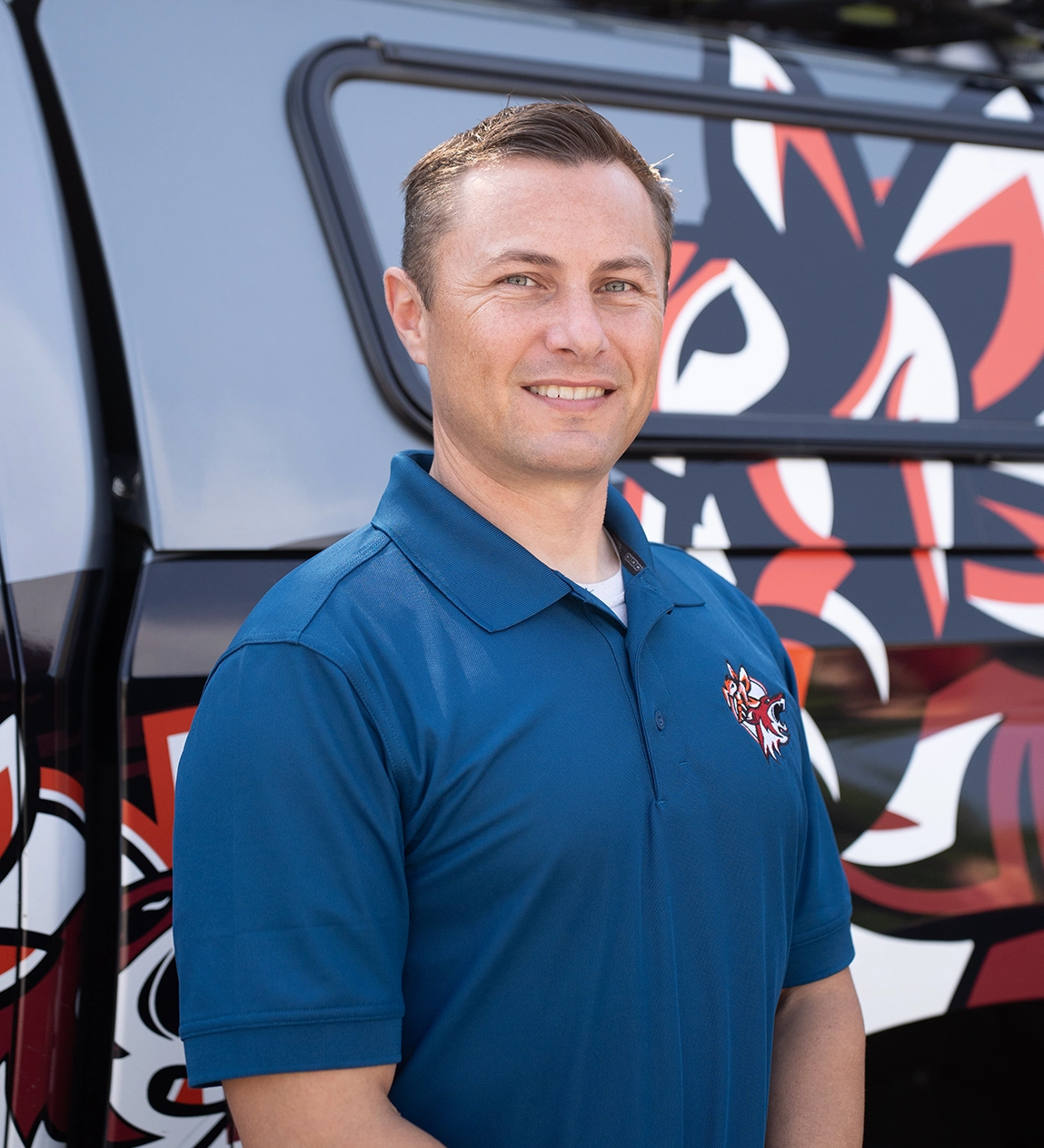
Jody was born and raised in South Carolina. He proudly served our country in the U.S. National Guard for 26 years, including in Afghanistan, Kuwait, and Iraq, where he was in the 228th Theater Tactical Signal Brigade. Jody underwent extensive training to become one of South Carolina’s top licensed and certified wildlife removal and exclusion experts. His ability to humanely handle various types of animals makes him the preferred pest and wildlife removal expert in South Carolina. Jody has been fully trained through the National Wildlife Control Operators Association (NWCOA). This extensive course certifies him in the most recent and innovative wildlife handling, disease, and exclusion practices. He is certified to remove armadillos, bats, beavers, birds, bobcats, coyotes, foxes, groundhogs, wild hogs, mink, muskrats, opossums, otters, pigeons, rabbits, raccoons, skunks, snakes, squirrels, woodpeckers, and more.
